
Searching Bulloch County Criminal Dockets
Georgia's official doorway is Georgia E-Access to Court Records. It works as a directory, not one statewide database. The Bulloch Superior and Bulloch State links both route to PeachCourt. PeachCourt wants an account before its case workflow appears. After signing in, choose the county and court. You can then search by case number or party name. Exact status filters, date choices, result limits, and export tools stay behind the login screen. Bring the right paper to the search. An indictment, accusation, citation, calendar notice, or clerk letter tells you which court holds the file. A bare name alone invites uncertain matches, while the case number is the strongest locator. When the online route stalls, call the clerk. Stop at the records counter, mail a focused request, or email the records office.
- Choose Bulloch Superior for a felony or Bulloch State for a misdemeanor.
- Sign in to PeachCourt and select Search, then Cases.
- Enter the full case number or party name.
- Match the court, caption, charge, and status.
- Ask the clerk for inspection or a certified disposition when proof is needed.
Bulloch Felonies Start in Superior
Bulloch County splits its criminal work across several courts, so knowing the charge type tells you where to look. The Superior Court Criminal Division keeps the felony files. State Court takes most misdemeanors and traffic cases. Magistrate Court handles warrant applications, bond hearings, probable-cause matters, and some ordinance cases. It is not the felony trial docket, though. Municipal courts hold city citations, and Juvenile Court gets restricted youth matters.
The split matters when you search. A misdemeanor case will not surface if you only search Superior Court. A Statesboro municipal citation belongs in State Court only after an appeal or transfer puts a record there. See the clerk's Superior Court information, which identifies the office responsible for felony docket records.
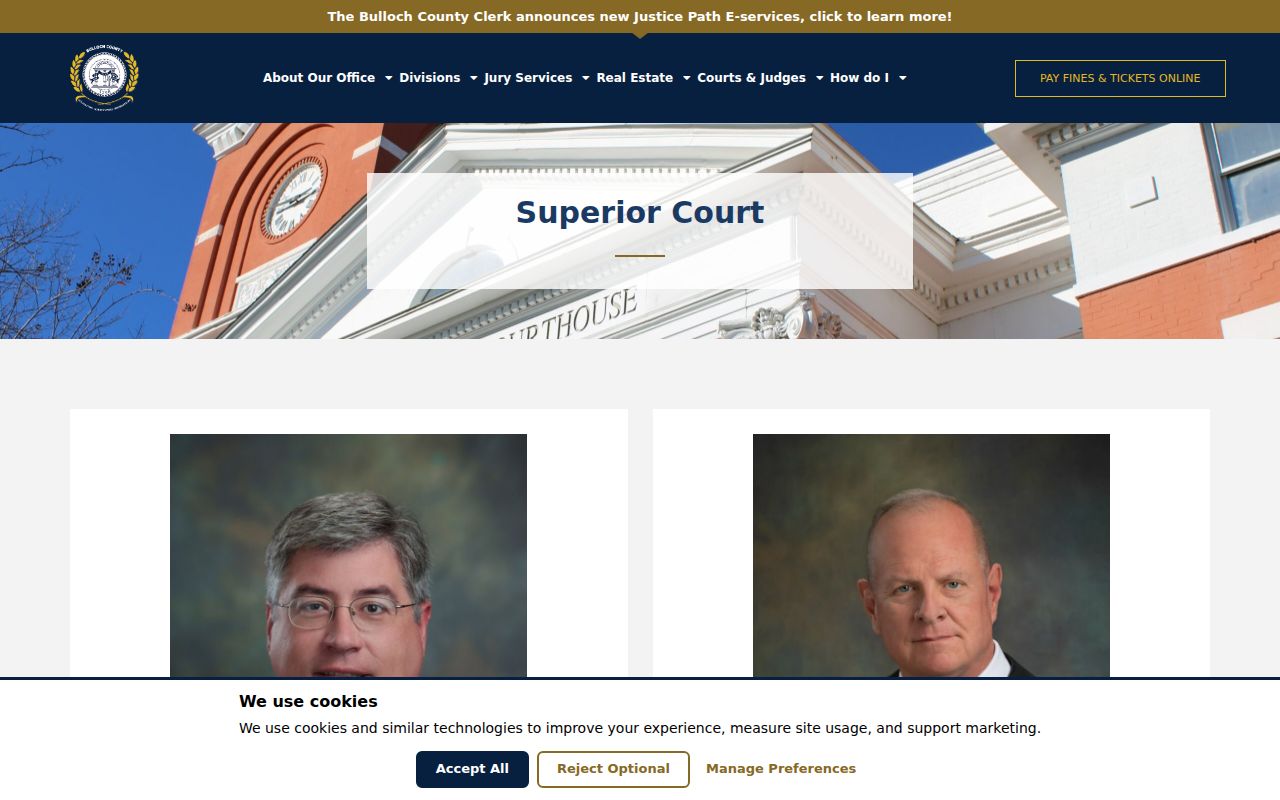
PeachCourt can give you the first look at a Bulloch County case. Even so, the clerk remains the authority for inspection and certified copies.
Inside a Bulloch County Criminal Docket
A docket is the running list of case activity. It runs broader than any calendar row and stands apart from each individual filing. Check the caption and court first. Bulloch criminal calendars display counts and offenses, but they never carry the complete case history.
| Case number | Superior examples combine year, SU-CR, sequence, and assignment suffix. |
|---|---|
| Caption and counts | Identifies the State, defendant, and numbered charges such as CT.1. |
| Settings | May list arraignment, calendar call, bond, motion, plea, or trial activity. |
| Plea and rulings | Records formal responses and orders, not mere calendar placement. |
| Disposition | May show dismissal, nolle prosequi, conviction, acquittal, sentence, or transfer. |
Trust only the wording in the live record. The public PeachCourt view posts no complete set of local status or disposition codes, so ask the clerk's office when an entry needs decoding.
Bulloch Criminal Judge-Code Clues
The clerk publishes a local key for Superior criminal assignments. Muldrew is MM. Bennett is B. Thompson is RT, and Hube is H. A suffix can decode a case number. Assignments change, so check the key against current clerk material before trusting a code. The official State Court page covers the separate non-felony court.
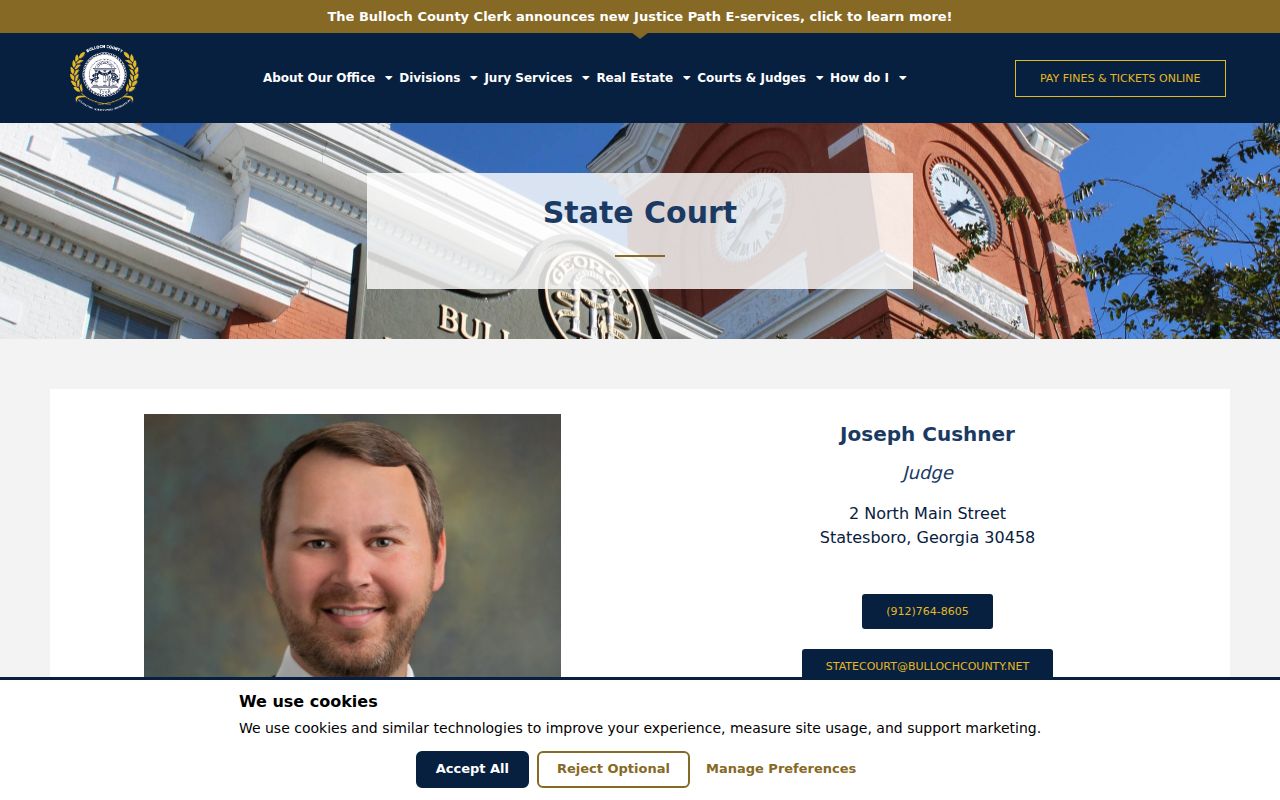
A judge code is a clue, not a conclusion. Never treat it as a stand-in for the court name, the full case number, or the setting notice.
How a Criminal Case Moves
A criminal docket grows one event at a time. The opening entry may be an indictment, accusation, complaint, warrant, or transfer, and its filing date is not always the offense date. Bond and first-setting entries often come next. Arraignment marks the formal plea stage, while motions, notices, orders, and resets build out the pretrial history.
Docket flow: Filing → Arraignment → Pretrial → Plea or Trial → Disposition → Sentencing
Later events still land on the docket. A notice of appeal, probation modification, transcript order, or revocation each adds an entry, and when the exact result matters you should request the signed judgment or a certified disposition.
Bulloch Calendars Are a Window
The county posts judge-specific criminal PDFs. Categories include calendar call, motions, bond, revocation, arraignment, pleas, status, and jury selection. A Bulloch Superior criminal calendar row shows report and setting dates, time, judge, attorneys, count, case number, defendant, offenses, and identifier columns. It shows settings, not the file. Missing pieces include the full filing history, linked pleadings, complete disposition, sentence balance, and seal controls. The official county calendar source tracks current setting categories.
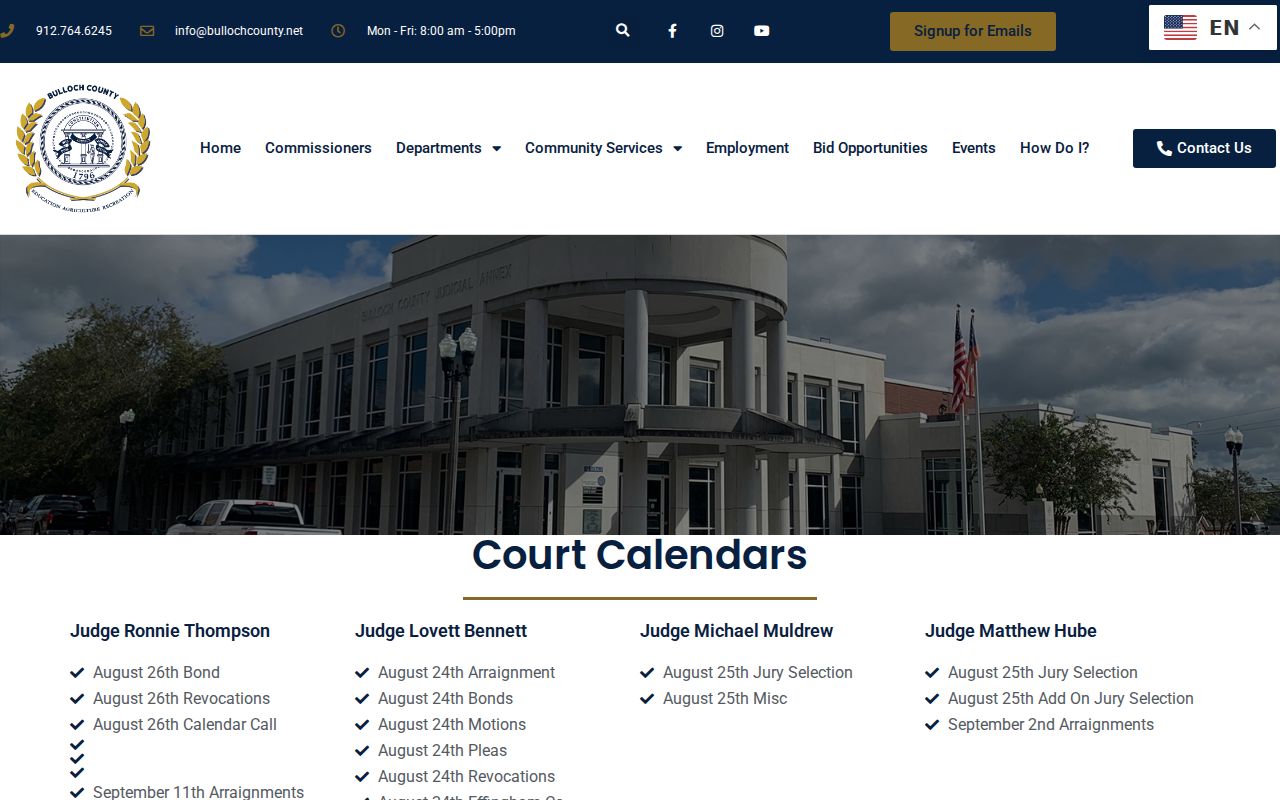
A PDF row can confirm a setting. It never replaces the docket itself. Verify the date if a later notice suggests a reset, and mask OTN, birth-date, and state-identification fields in any saved example.
Courts That Hold Criminal Dockets
Bulloch County has several criminal record channels. The correct route follows the charging court.
| Court | Criminal work | Access route |
|---|---|---|
| Superior | Felonies, trials, revocations, post-judgment work | PeachCourt, clerk, calendars |
| State | Misdemeanors and most county traffic | PeachCourt, clerk, administrator |
| Magistrate | Warrants and bond matters | Magistrate clerk; no public portal found |
| Municipal | City traffic and ordinance cases | Each city court |
| Juvenile | Youth matters | County clerk, with restrictions |
Two counters cover the criminal dockets. Magistrate Court sits at 101 Oak Street and answers at 912-764-6458, while the Superior, State, and Juvenile clerk holds 20 Siebald Street and 912-764-9009.
Older Bulloch Felony Files
Not every Bulloch County felony file lives on a screen. Some older criminal dockets still sit with the clerk on microfilm. Others have moved to an archive. Georgia Archives finding aids describe old volumes. They cover court term, attorneys, case number, defendant, charge, disposition, sentence, fine, and later entries. Keep in mind a finding aid is an inventory, not a live case database.
Email the clerk at clerkinfo@bullochcounty.net with a precise request. Give the case number, the caption, the record you want, and your contact details. The clerk quotes a three-to-five-business-day processing window. Mail goes to 20 Siebald Street once payment is confirmed.
No modern case number? A date range and court term can still narrow the search. Say whether you want the full docket history. Do you need one signed order, a sentence, or the final disposition? That one detail helps staff pull the right record and estimate cost. If the clerk cannot locate an old volume, ask about the Georgia Archives finding aid or a retention explanation. Do not assume the case vanished.
Sealed Dockets and Public Access
Georgia court records start open to the public. Laws, court rules, and supported orders can still limit a criminal file. Juvenile matters, protected identifiers, and sealed documents all call for care. A missing PeachCourt result proves nothing either way. The case may exist and still be sealed. Ask the clerk directly whether a specific record is inspectable and whether a redacted copy is available.
Key rules:
Uniform Superior Court Rule 21 sets the access baseline and sealing process.
Georgia Open Records Act guidance addresses agency records, exemptions, timing, costs, and redaction.
Georgia electronic filing rules give accepted electronic records the same access status as traditional records, subject to law or order.
The Open Records Act cannot unlock a sealed court file on its own. Court-file requests still go first to the clerk.
Bulloch Criminal Copy Choices
A docket entry, a document image, and a certified copy serve three different needs. PeachCourt's terms set the document and page charges. The local clerk prices regular copies at $0.50 per page. Certified copies run $2.50 for the first page plus $0.50 for each added page. Non-standard records run $1 per page. The fee list posts no separate search charge. The clerk's copy page shows both electronic and in-person options.
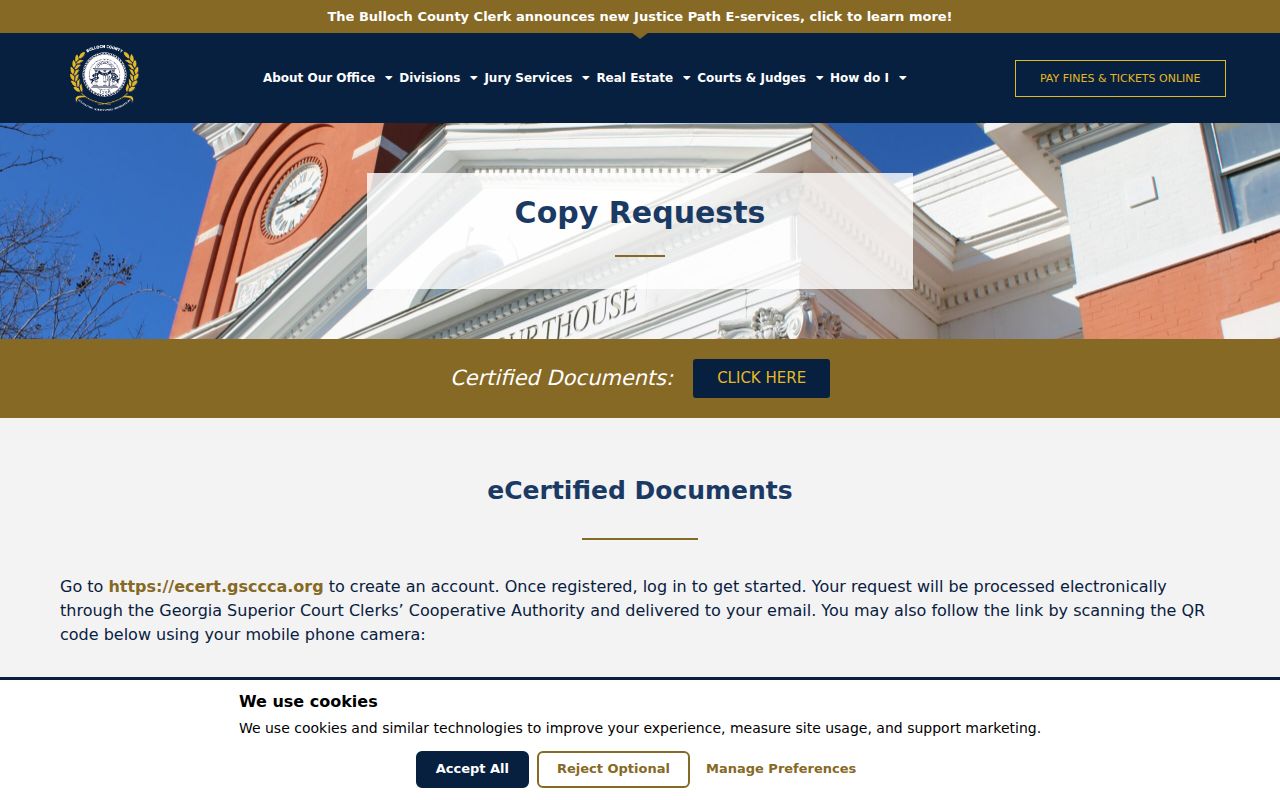
Before ordering a bulky file, ask the clerk for a cost estimate and say whether you need a plain copy or a certified one. Georgia eCertified Documents provides an account-based electronic certification option. A calendar download pulled from an official page is still not a certified record.
For any copy request, give your name, contact details, a case number or locator, and a clear description of what you need. Confirm the payment amount before mailing funds. Transcripts take a different route. The court reporter or transcriber may hold them rather than the clerk's copy desk.